QSHIELD
Know exactly where quantum-breakable cryptography lives in your systems — before it becomes an emergency.
QShield discovers, classifies, and prioritizes every quantum-vulnerable use of cryptography across cloud infrastructure, source code, containers, certificates, and more — then turns that inventory into a signed, auditable migration plan.
WHAT IT IS
A cryptography inventory you can trust
Every major algorithm underneath today’s security — RSA, ECDSA, ECDH, Diffie-Hellman, DSA — will be breakable by a sufficiently large quantum computer using Shor’s algorithm. NIST finalized the first post-quantum replacement standards (ML-KEM, ML-DSA) in 2024, and “harvest now, decrypt later” means encrypted data being intercepted today is already exposed once that hardware exists — this isn’t a someday problem for long-lived data.
The hard part isn’t knowing PQC exists. It’s knowing where your own systems use vulnerable cryptography— across cloud accounts, source code, containers, certificates, VPNs, backups, and firmware that were built up over years by different teams. Most organizations don’t have a real answer to that question. QShield is built to produce one, with evidence attached to every claim it makes.
WHAT IT DOES
Discover. Classify. Prioritize. Prove it.
Discovers real infrastructure
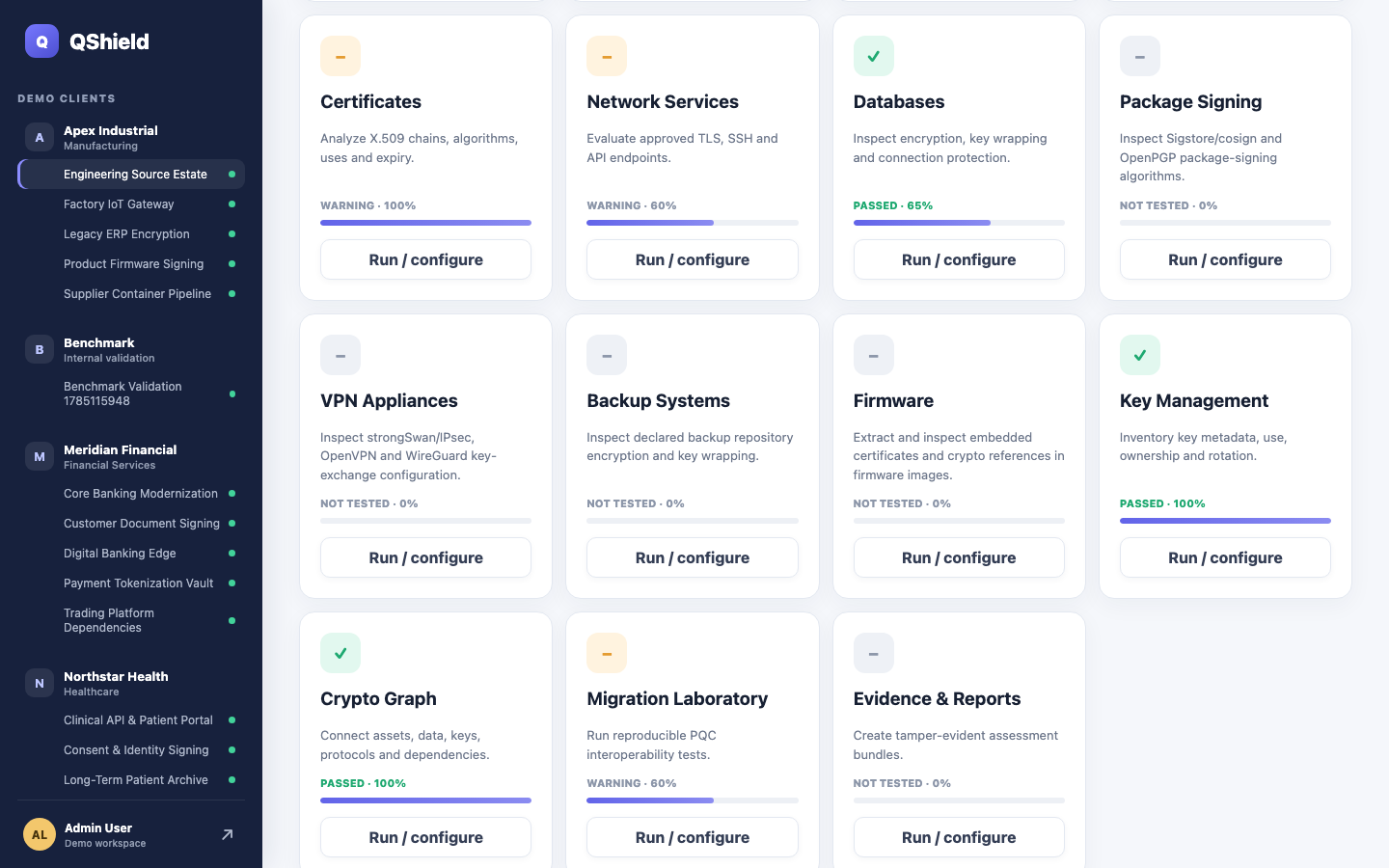
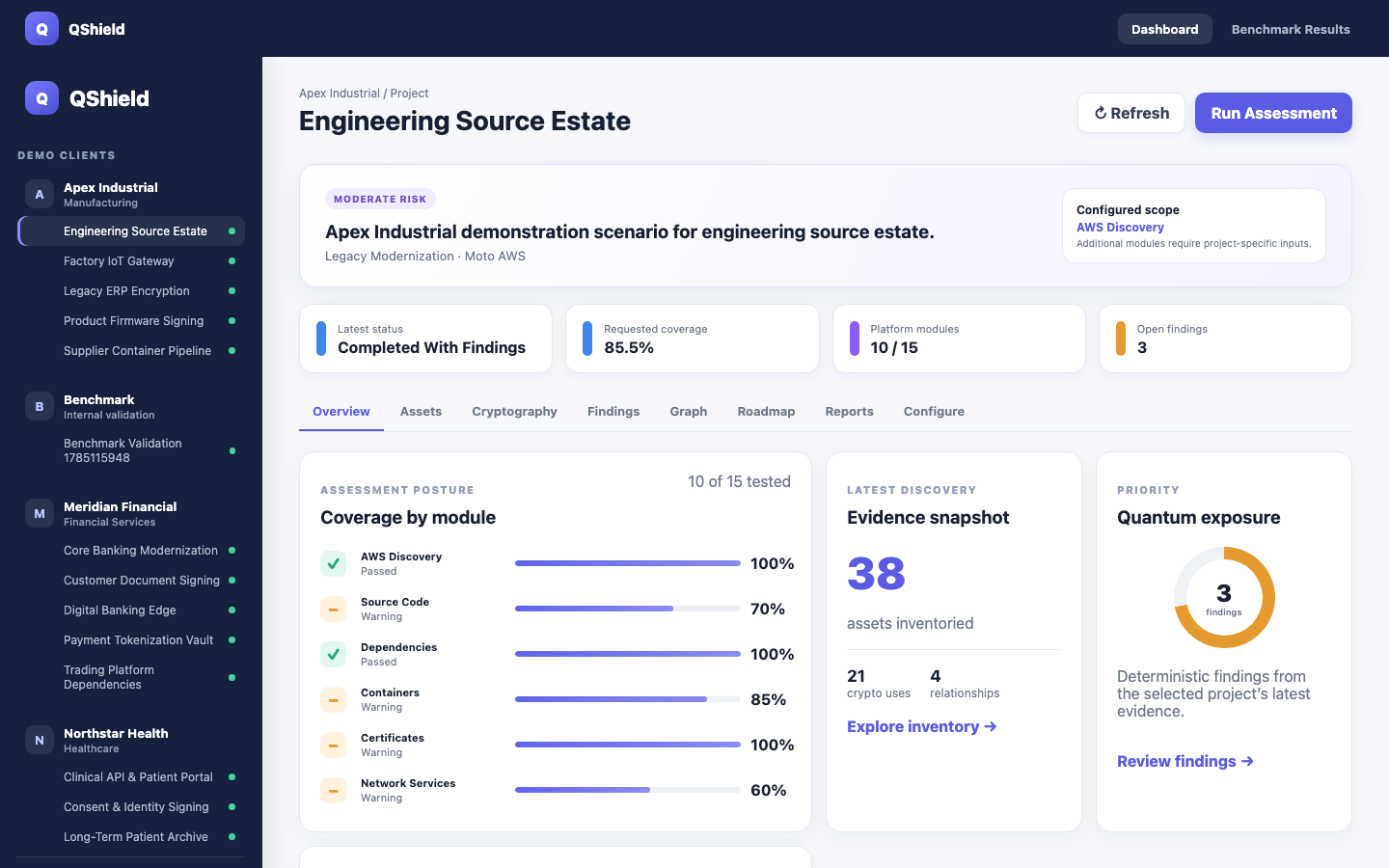
Cloud accounts (AWS ACM, KMS, S3, RDS, ECR, load balancers, Lambda), live source repositories, container images, certificates, network endpoints, and more — eleven scanner modules, each reading directly from a live target.
Classifies deterministically
A single, unit-tested function decides whether an algorithm is quantum-vulnerable, and every scanner and the risk engine call that exact function.
Prioritizes with a real score
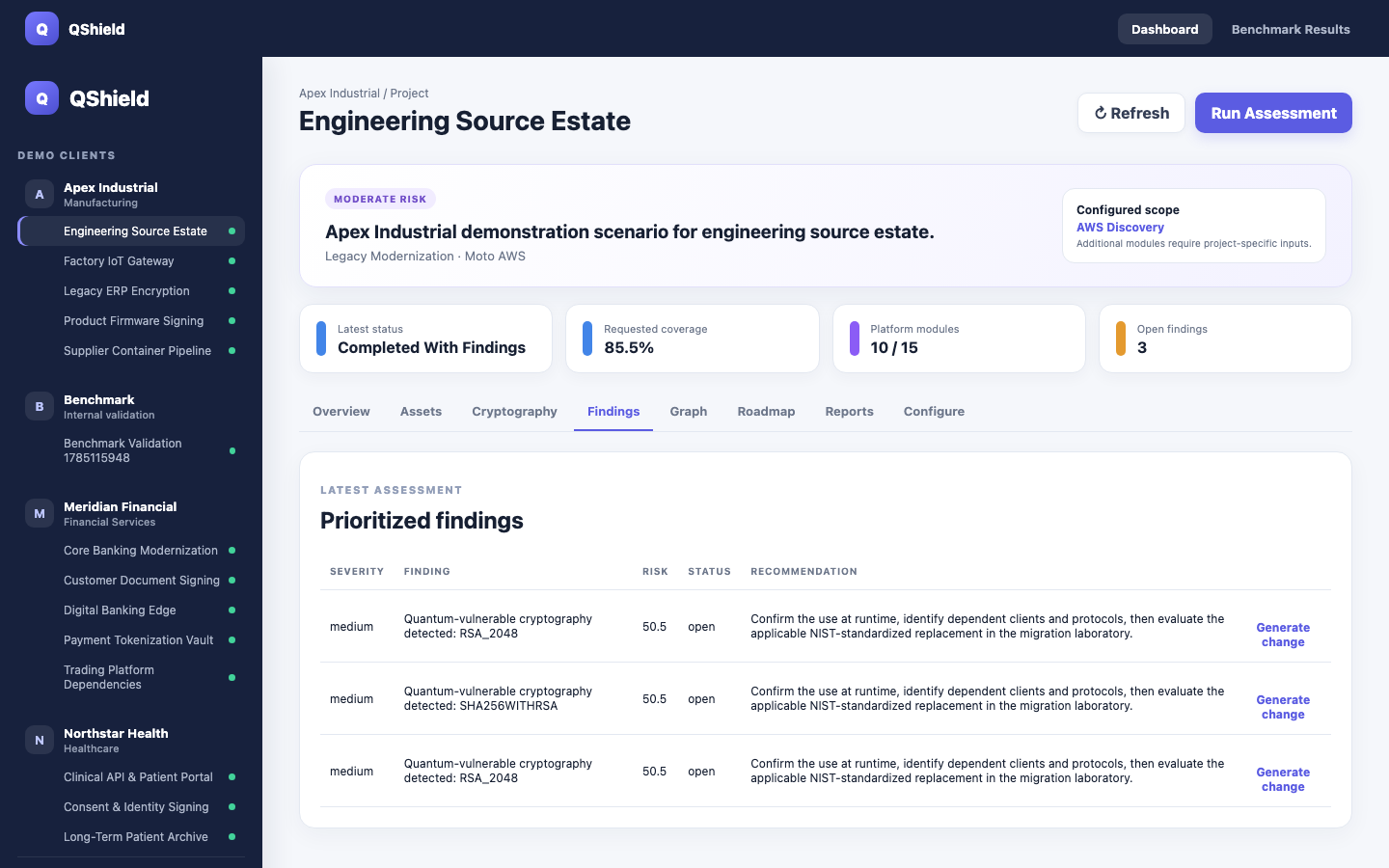
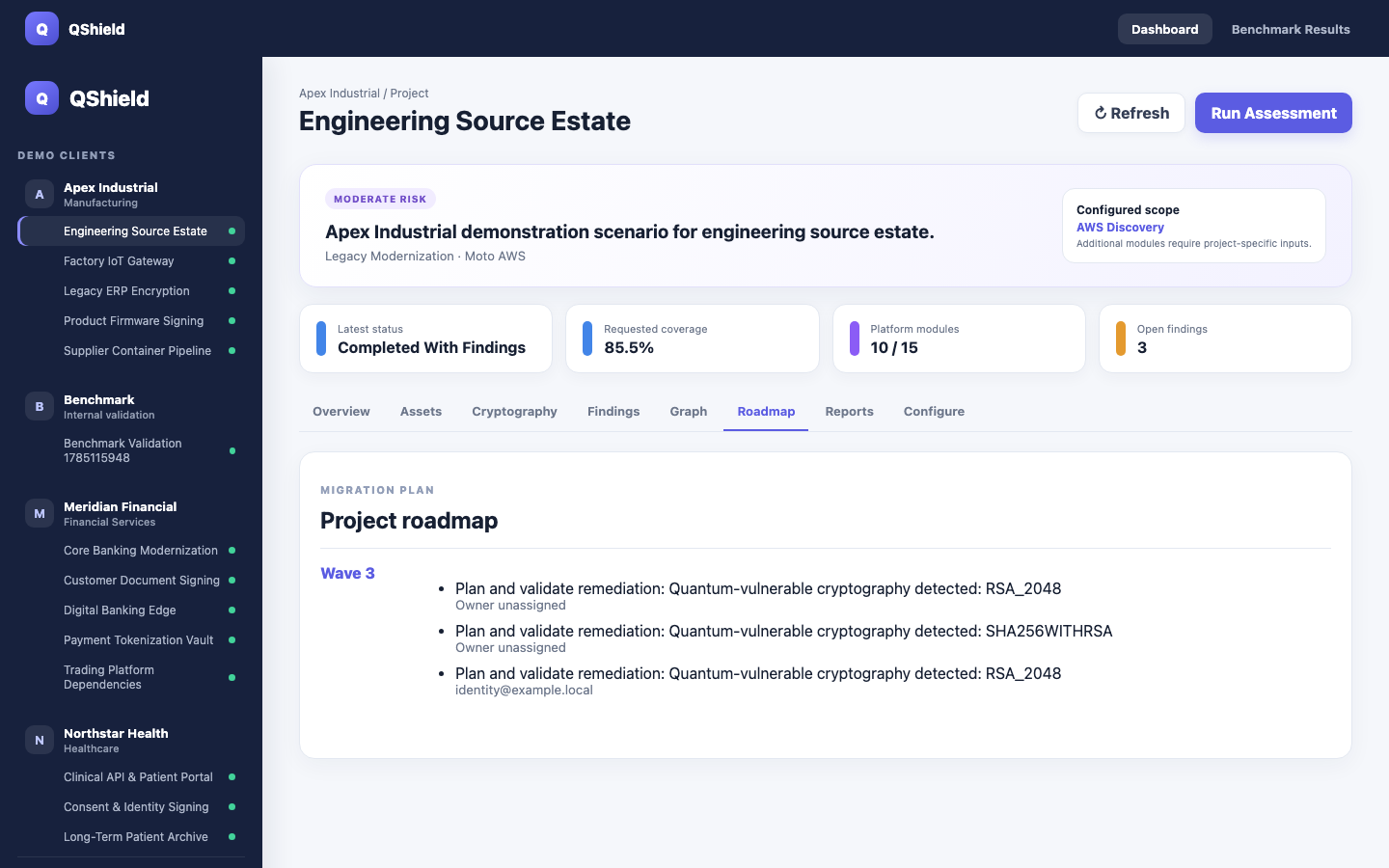
Findings are risk-scored from algorithm urgency, data longevity, sensitivity, criticality, and exposure, then sequenced into migration waves ordered by what needs attention first.
Shows the blast radius
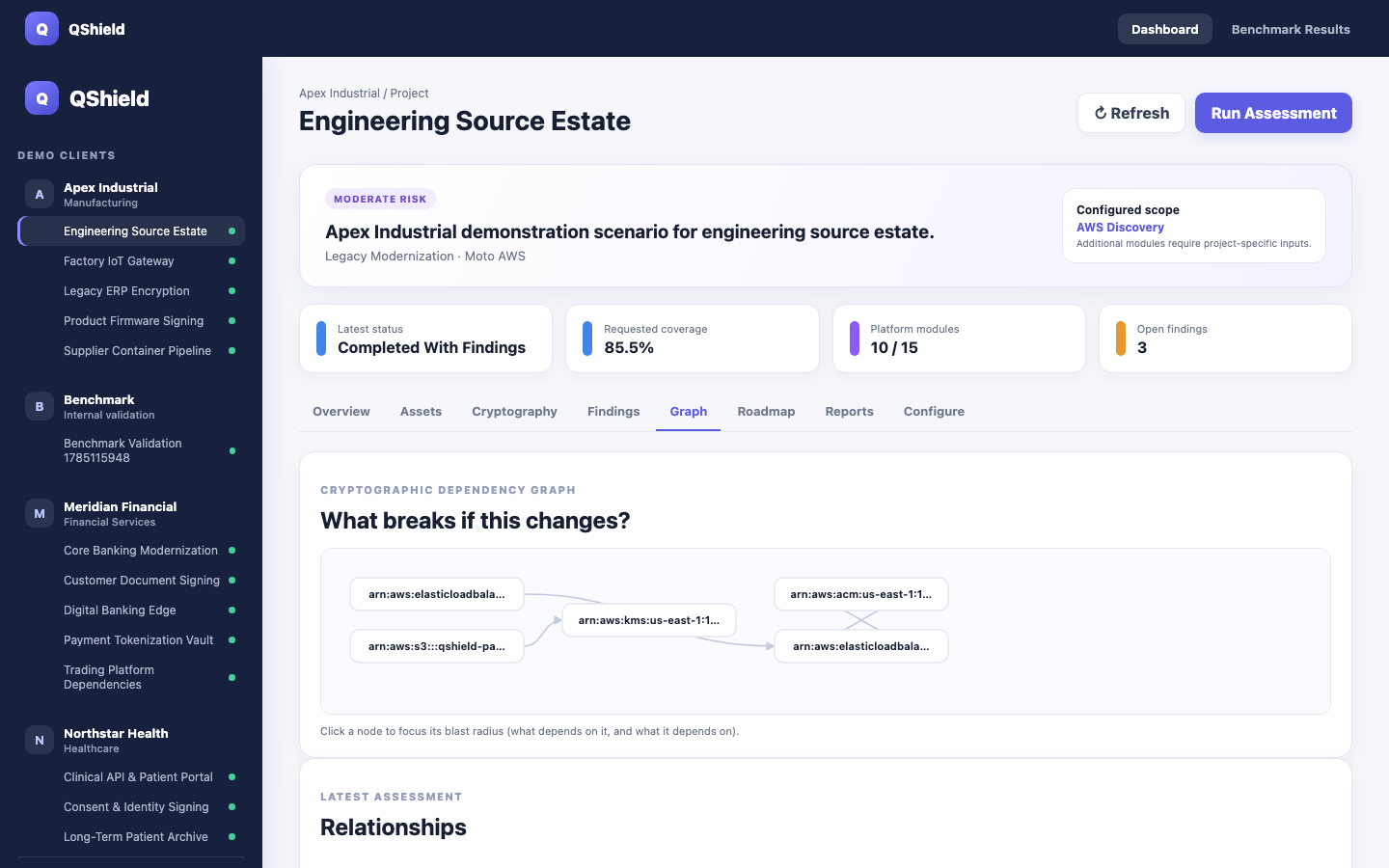
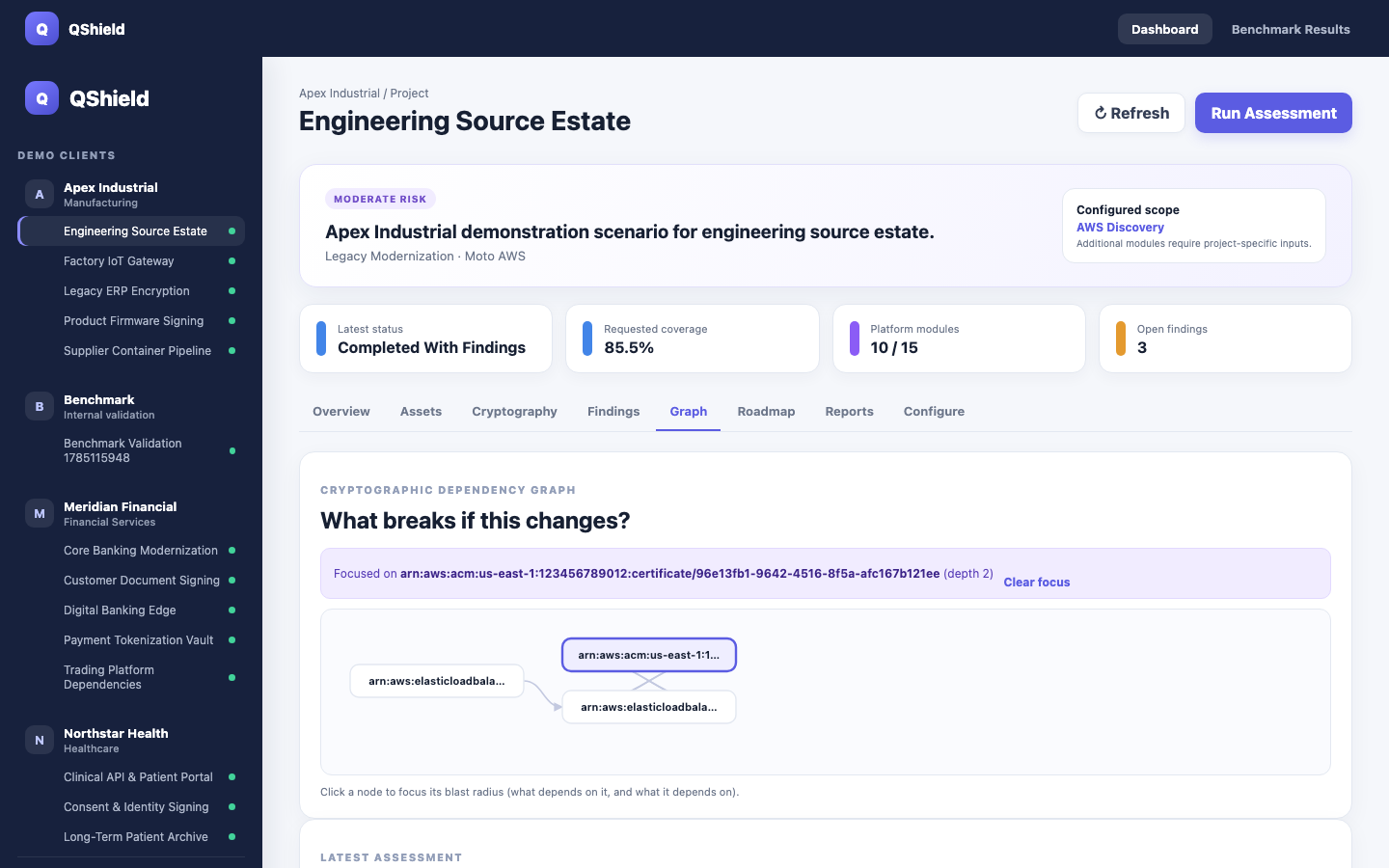
A live dependency graph answers “what breaks if this changes” by traversing the relationships discovered during the assessment.
Scores crypto-agility
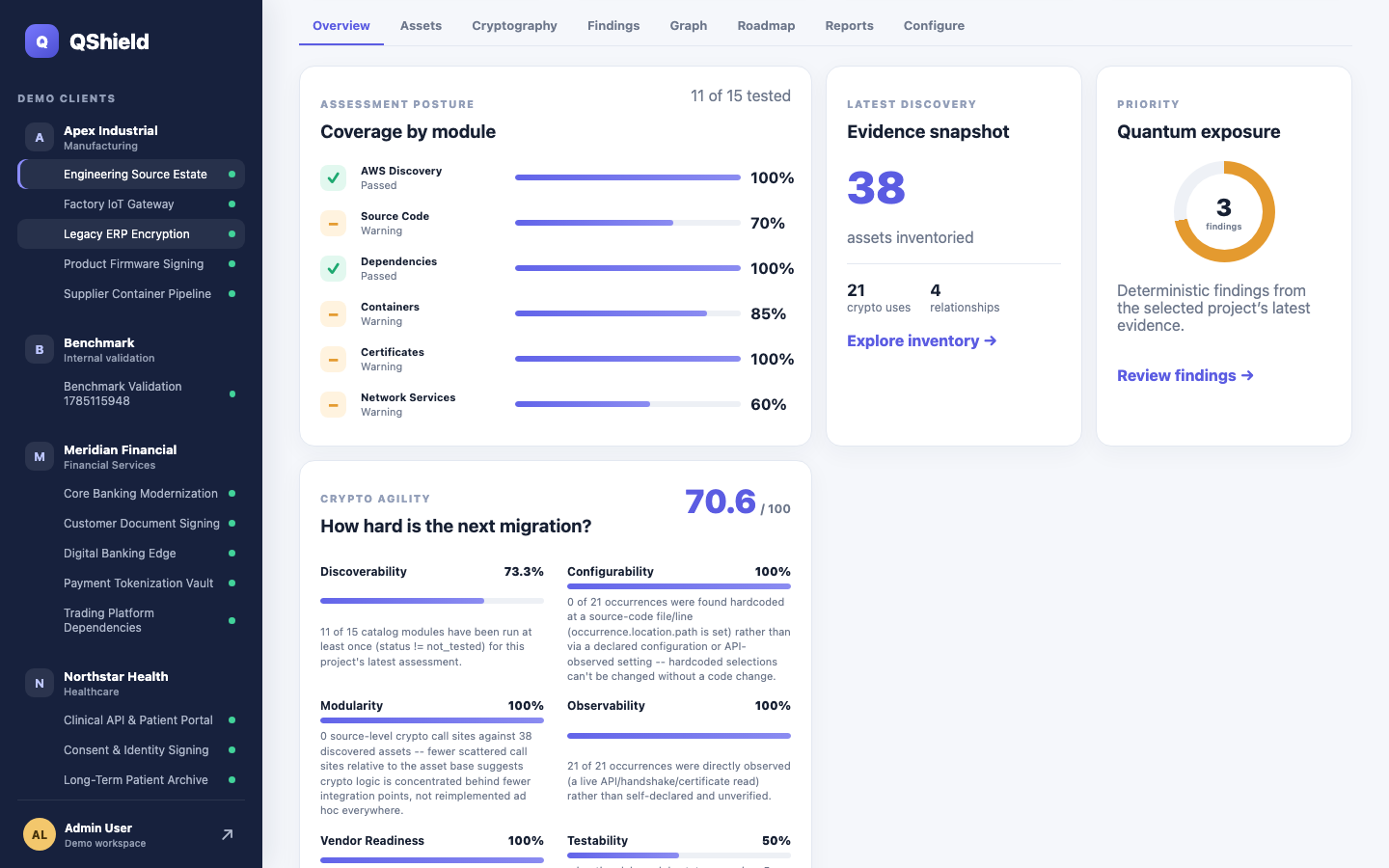
Eight evidence-grounded dimensions — discoverability, configurability, modularity, observability, vendor readiness, testability, recoverability, governance — each shown with the specific evidence behind its score.
Drafts the remediation, never files it
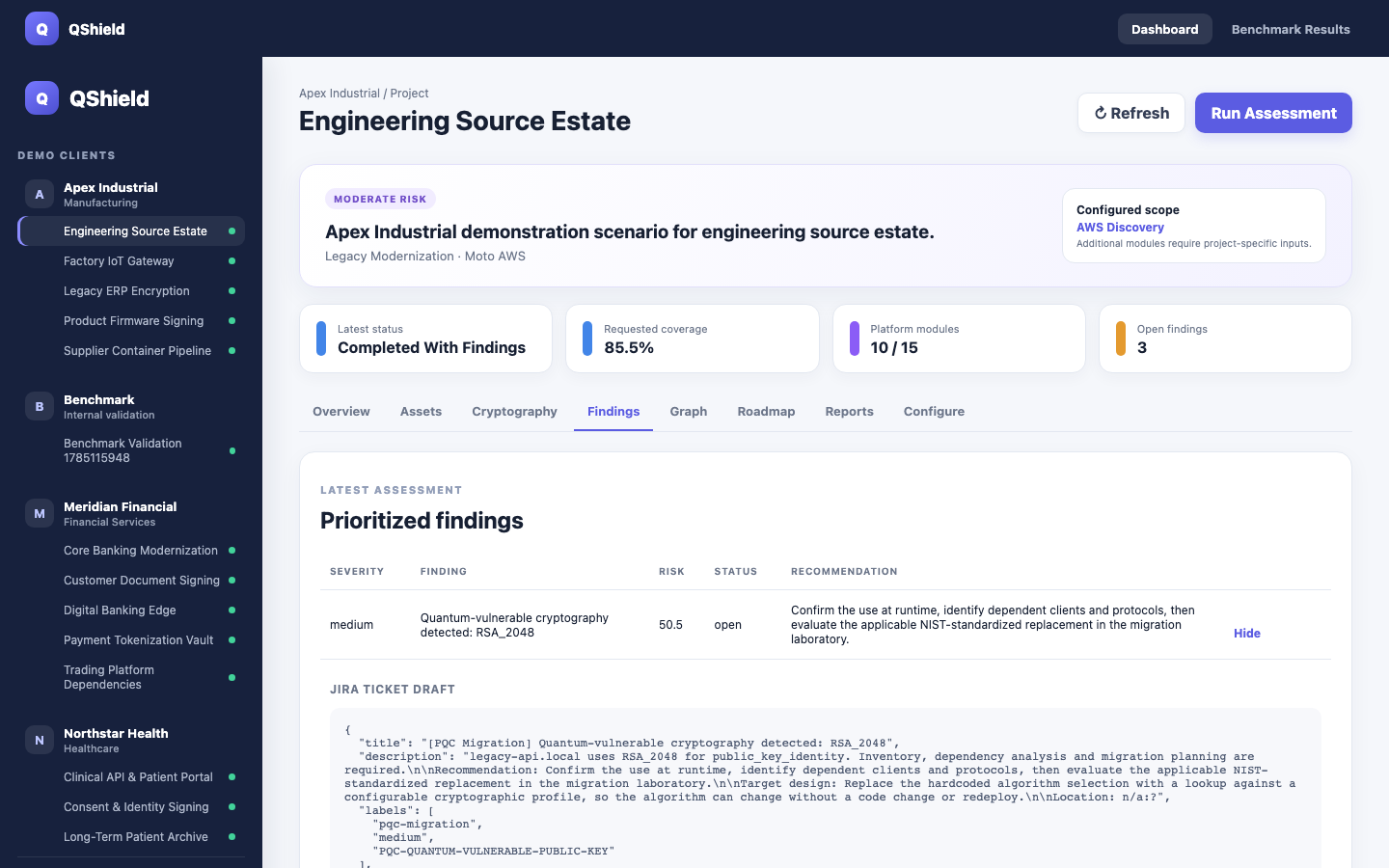
Generates a suggested code annotation, a Jira ticket draft, and a GitHub PR draft for a finding, precisely anchored to the flagged line and left for your team to review.
Tests real PQC interoperability
Measures ML-KEM-768 and ML-DSA-65 operations via liboqs against a classical RSA-2048 / ECDH-P256 baseline, with size and speed numbers taken from the run itself.
Proves it with a signed report
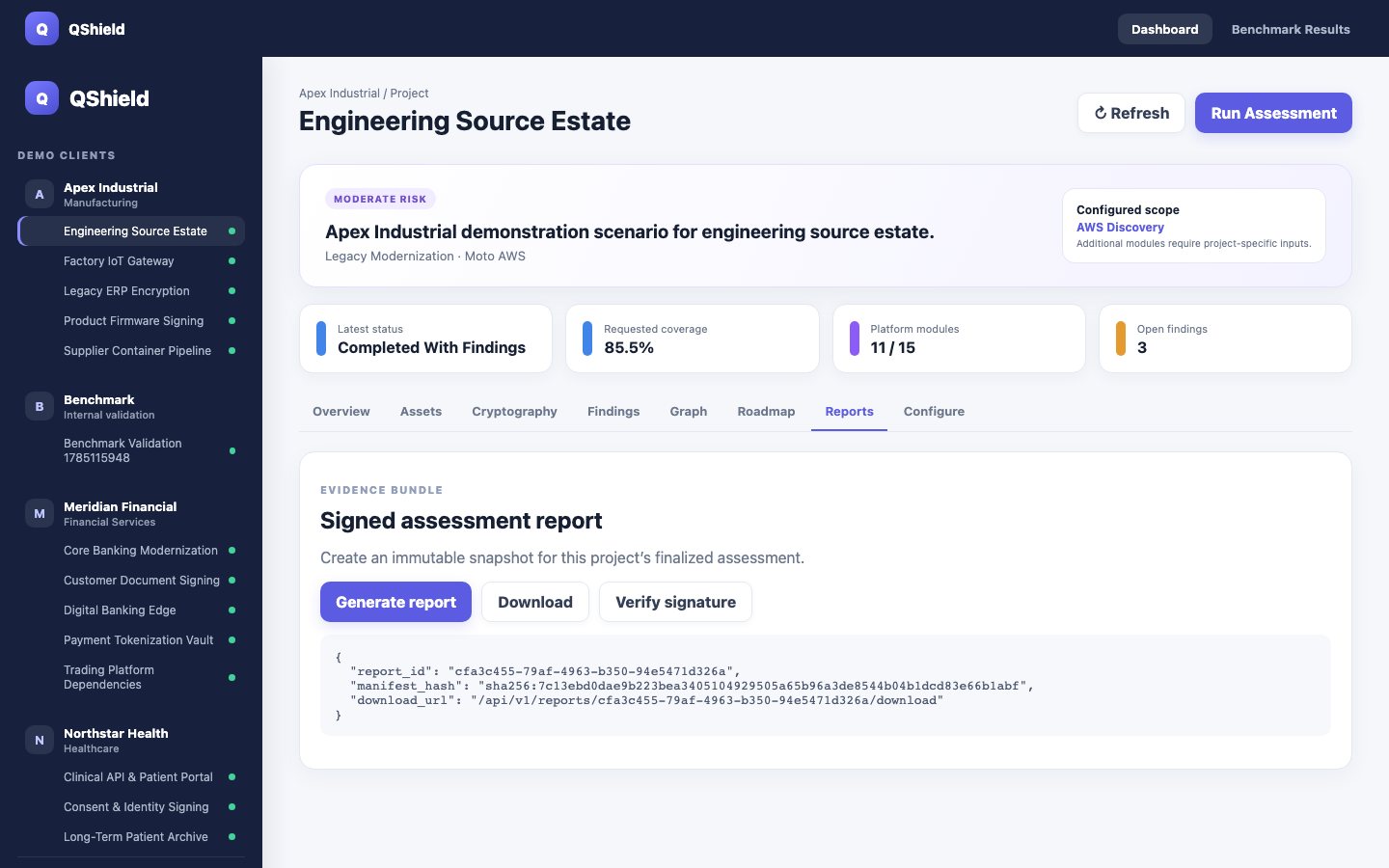
Every assessment can produce a tamper-evident, Ed25519-signed evidence bundle that anyone can independently verify with a hash-and-signature check.
HOW IT WORKS
Four steps, evidence at every one
- 1
Connect
Point QShield at an AWS account, a git repository, or a declared target — read-only, on your terms.
- 2
Discover & classify
Scanner modules run against real targets in parallel; every algorithm found is deterministically classified.
- 3
Prioritize
Findings are risk-scored and sequenced into a migration roadmap; the dependency graph shows what depends on what.
- 4
Prove it
Generate a signed evidence report that anyone — an auditor, a regulator, a customer — can independently verify.
SEE IT IN ACTION
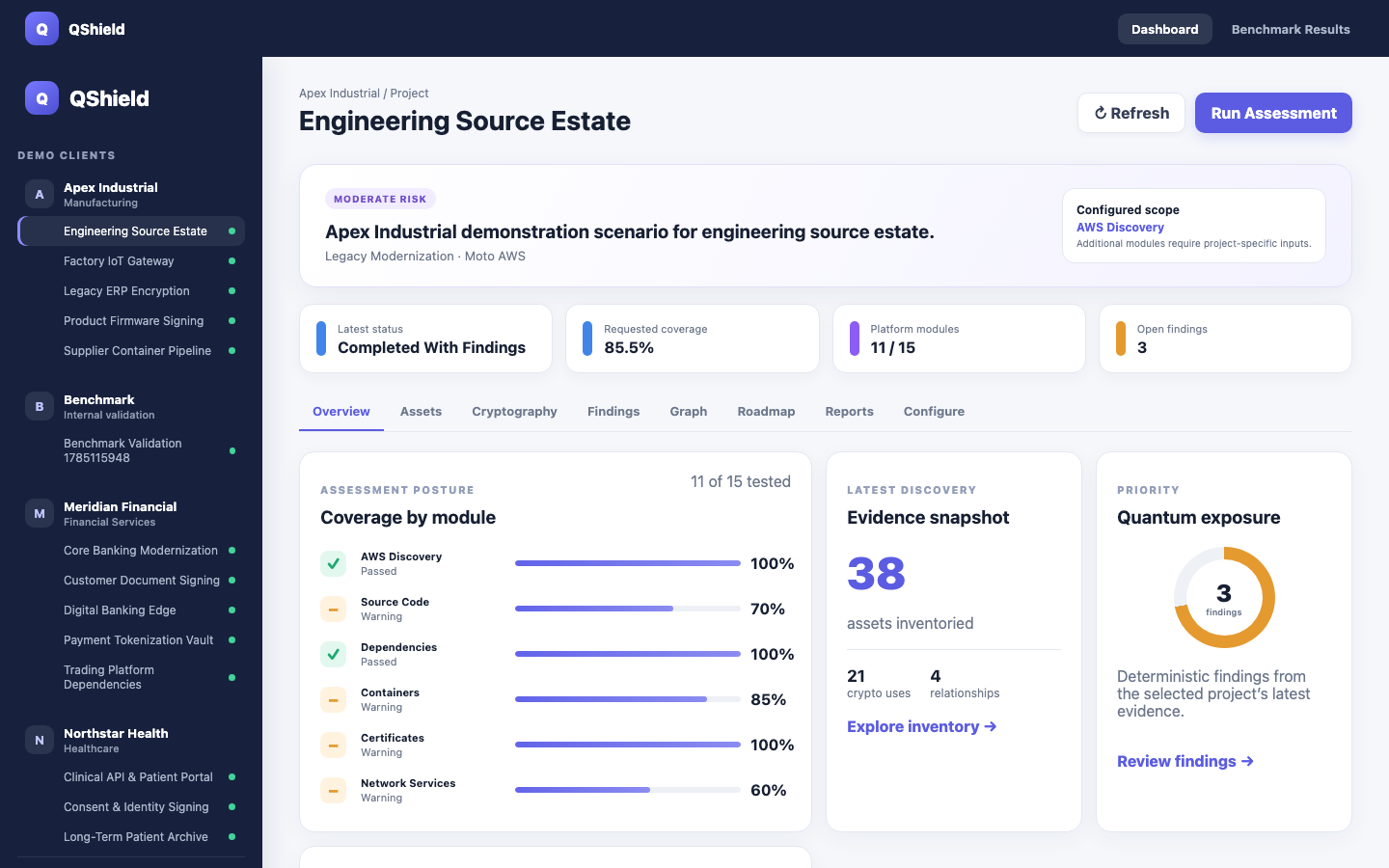
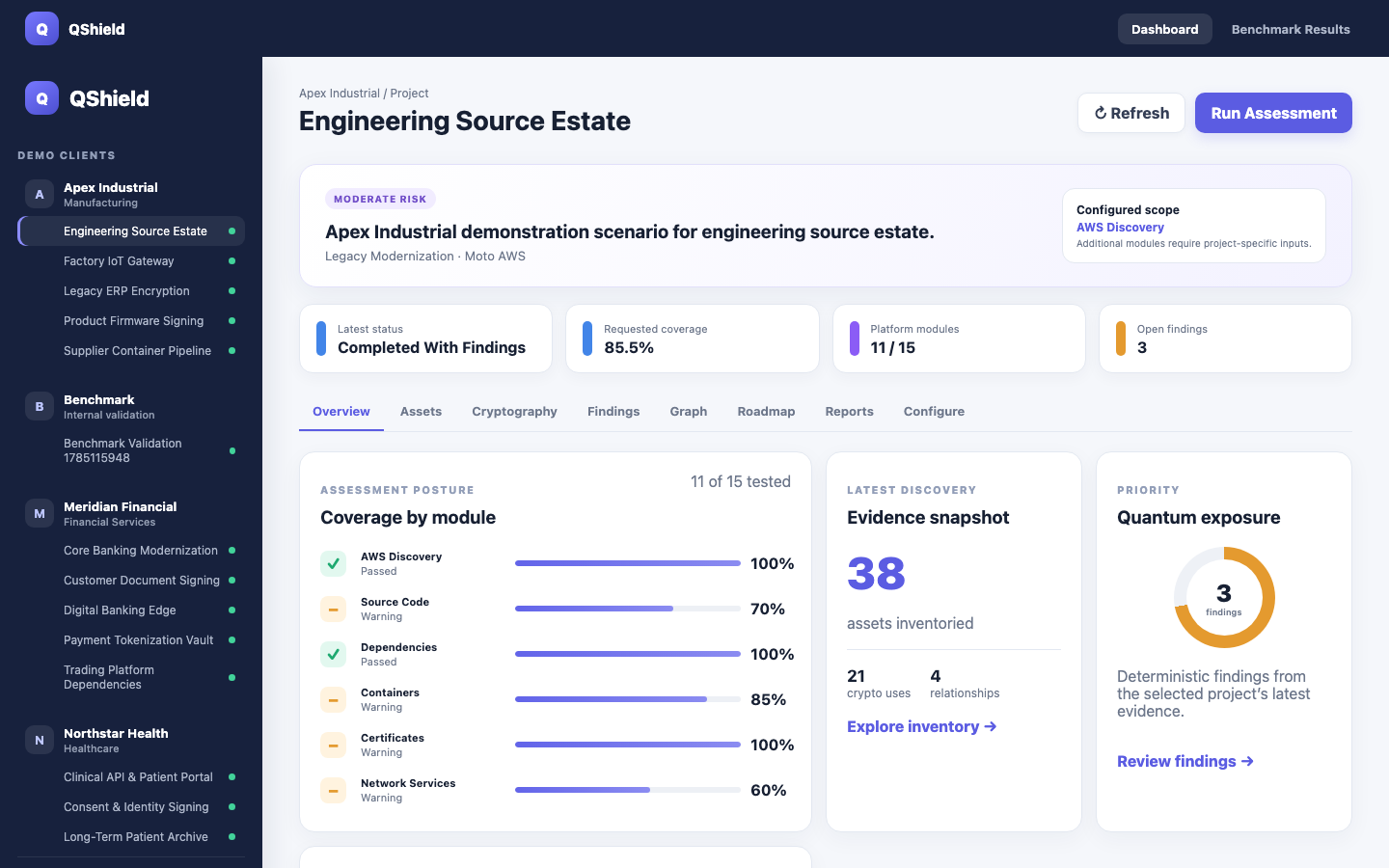
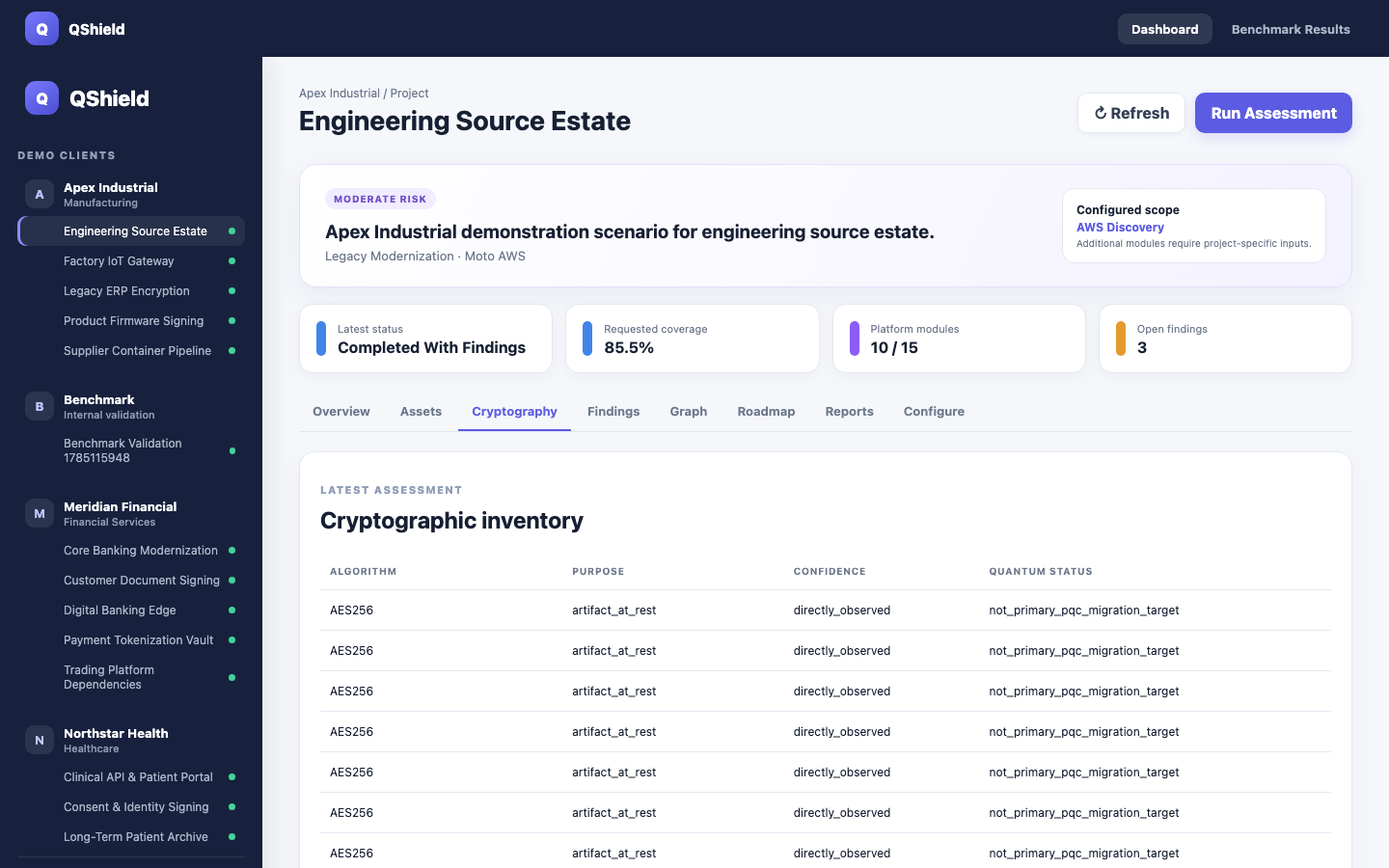
Screens from the live product
Every screen below is an unedited capture, not a mockup.
FOR YOUR TECHNICAL TEAM
Everything above, in engineering detail
Expand any section below. Nothing here contradicts the summary above — it’s the same platform, described precisely.
FAQ